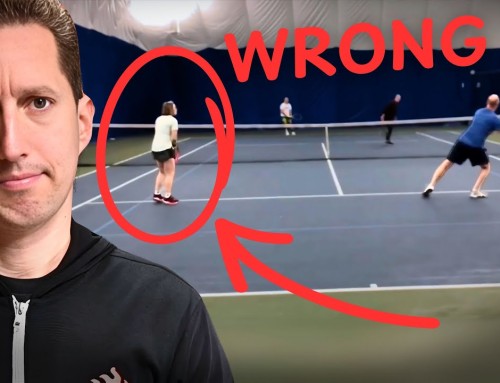
I was watching a doubles match recently, and something really stood out to me. There weren’t a ton of big winners, and nobody was absolutely crushing the ball, but one team kept winning point after point almost effortlessly using smart, advanced doubles tactics. It didn’t look flashy at all, and that’s exactly why it was so interesting. They weren’t overpowering their opponents — they were simply outplaying them in a much more subtle way.
And it had nothing to do with talent. It came down to how they were using pressure, positioning, and anticipation in a really smart way.
If you’re trying to improve your doubles game, this is one of the biggest mindset shifts you can make. Most players think their job at the net is to hold their position, cover their side, and react when the ball comes to them. But high-level doubles players don’t think that way at all. They’re constantly looking for ways to get involved in the point, even when the ball isn’t coming directly to them.
A perfect example of this is something I call “the squeeze.” Let’s say your opponent is moving forward and has to hit a low volley from around the service line or maybe even a little behind it. That’s already a difficult situation. Most players in that position are just trying to survive the shot and keep the ball in play. But instead of staying in your lane and watching it happen, you begin to shift slightly toward the middle of the court.
It’s not a huge movement, and it doesn’t need to be dramatic. But that small adjustment changes everything. Now you’re in your opponent’s field of vision. The space they were aiming for suddenly feels tighter. The margin for error shrinks. Even if you don’t touch the ball, you’ve just made that shot significantly more uncomfortable.
This is where a lot of doubles players get stuck. They understand that the middle is important, and they know they should be helping their partner, but they hesitate. The fear of getting passed down the line keeps them frozen in place. They’d rather protect against the one embarrassing shot than take control of the situation.
But if you really think about it, most low volleys don’t go cleanly down the line. They go crosscourt, or they end up in the net. So when you don’t squeeze and apply pressure, you’re actually making things easier for your opponent. When you do move, you’re stacking the odds in your favor without having to hit a single extra ball.
Now, once you start doing this consistently, something interesting begins to happen. Your opponents will start to notice. Good players always do. They’ll recognize that you’re active, that you’re anticipating, and that you’re taking away their favorite target through the middle.
At some point, they’ll try to adjust. Instead of hitting the safer crosscourt shot, they’ll change direction and go down the line to catch you moving. And if you’ve ever been burned by that, you know how frustrating it can feel. It almost makes you want to stop being aggressive altogether.
But this is where you need to look at the bigger picture. That adjustment from your opponent is actually a sign that what you’re doing is working. They’re being forced out of their comfort zone. And hitting down the line from a low, defensive position is not a high-percentage play. It’s a risk. So even if they win a point or two that way, over time you’re still putting yourself in a stronger position by staying active and applying pressure.
Now we take it one step further, and this is where things start to get really fun. Instead of just reacting to your opponent’s adjustment, you begin to influence their decisions. After you’ve shown that you like to move toward the middle, you can use that expectation against them.
You give them a look. Maybe you start to shift slightly toward the center again, just enough to make them think you’re committing. You’re not overdoing it — just a subtle movement that gets their attention. In that moment, they start to make a decision based on what they think you’re about to do.
They see you moving and think, “Okay, this time I’m going down the line.”
But instead of fully committing across, you recover back to your original position. And now that shot they thought was open is suddenly covered. What they believed was the right play turns into an easy opportunity for you.
That’s not reaction — that’s manipulation. And it only works if you’ve set it up properly. You can’t skip straight to the fake without first establishing real movement. Your opponent has to believe that you’re actually going to take that middle ball. Once they do, that’s when you can start playing with their expectations.
At that point, you’re no longer just playing the ball. You’re playing the person across from you. You’re thinking one step ahead, and that’s what separates good doubles players from advanced ones.
One last thing that’s really important here — all of this is built around handling those tough, low volleys and awkward contact points. These situations happen constantly in doubles, especially when players are serving and coming forward. If you’re not comfortable dealing with those shots, you’re going to hesitate, and that hesitation takes away your ability to apply pressure.
So while you’re working on these tactics, make sure you’re also developing your touch and control in those situations. Because once you feel confident there, everything else starts to open up.
Try this out the next time you play. Start small. Be a little more active. Pay attention to how your opponents respond. It might feel unfamiliar at first, and that’s completely normal. But once you start to see how much influence you can have on a point without hitting harder or riskier shots, it changes the way you see doubles completely.
Your Coach,
Ian