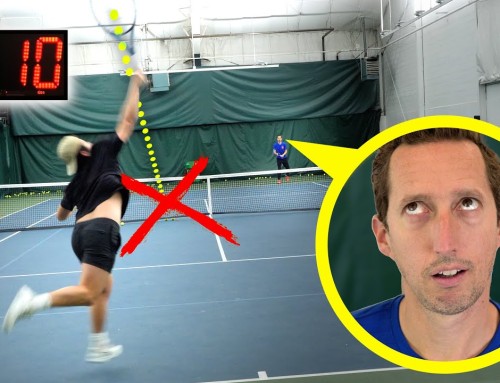
I recently played a doubles match where I was the net player and my partner had the least weapons on the court.
The three other players were all 4.0 competitors, but the two opponents across the net were offensive, athletic, and loaded with weapons. My partner? Defensive minded with a modest serve.
Sound familiar?
This situation comes up all the time in doubles, and most players just suffer through it, standing on their side of the court hoping their partner somehow figures it out. I decided to take a completely different approach, and I want to walk you through exactly what I did so you can use the same strategy yourself.
The first thing I noticed early in that game was a pattern developing that I really didn’t like. My opponents were coming right in behind their returns, pressuring my partner deep on the baseline, and I was just standing there watching it unfold. That’s a losing formula. Two aggressive players will eventually get comfortable with a weak serve, start making every return, and completely take you out of the match.
So I made a decision. I was going to have to make something happen.
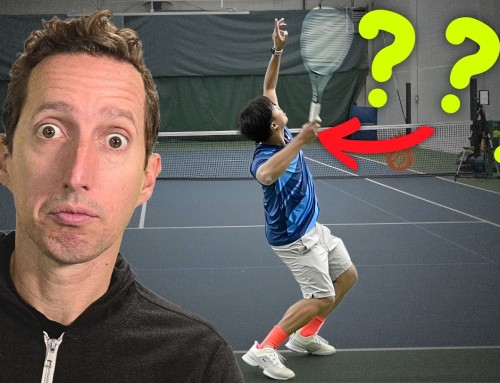
The key concept here is layering your movements as a net player. On the first poach attempt I made, I timed my move with my opponent’s forward swing and got exactly the ball I wanted at shoulder height in the middle of the court. Then I made a classic mistake and hit it right back to the baseline player instead of putting it away. I was disappointed in myself, but I didn’t quit.
That’s important. Don’t quit.
From there I started mixing it up. First a real poach timed to the swing. Then an early fake move to bait my opponent into going down the line. Then a fake fake, where I show the early move, stop, and actually go as she swings crosscourt. Each layer only works because of the one before it. You can’t skip ahead. The fake only has value after the poach. The fake fake only works after the fake.
There’s a mindset element here that I really need you to understand.
A lot of players watching those early points would have said just give it up. She was hitting perfect down the line shots, a foot or two from the line, back to back. But here’s the question I want you to sit with: what percentage of points do you actually need to win a tennis match?
It’s 51%.
That’s it. You do not need to dominate every point. You do not need to win eight out of ten. You just need 51%, and when you understand that, the math behind what I was doing starts to make a lot more sense. I was getting burned occasionally, yes, but my opponents were moving exactly where I wanted them to move. I was controlling the point even when I wasn’t winning it. Over the long run, the law of large numbers starts working in your favor.
By the end of that game, out of ten total points played, I intercepted four of them and got burned twice. My partner only had to hit three shots the entire game, not counting her serve, because I was up at the net controlling where my opponents went and what they were thinking about.
Six times I made a move and they did exactly what I wanted them to do.
That’s not luck. That’s educated, pattern-based strategy with a big picture mentality behind it.
Next time you find yourself at the net with a partner who’s getting pressured, don’t just stand there covering your side. Use the poach.
Use the fake. Use the fake fake. Take control of the point and take the pressure off your partner completely.
You only need 51%.
Your Coach,
-Ian