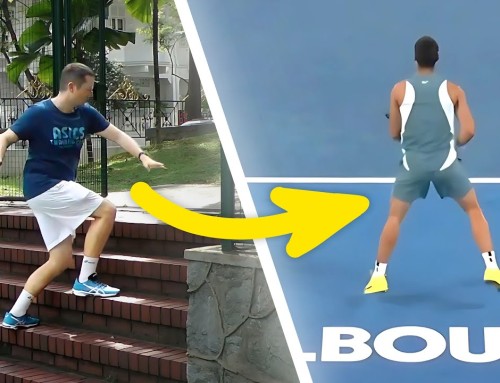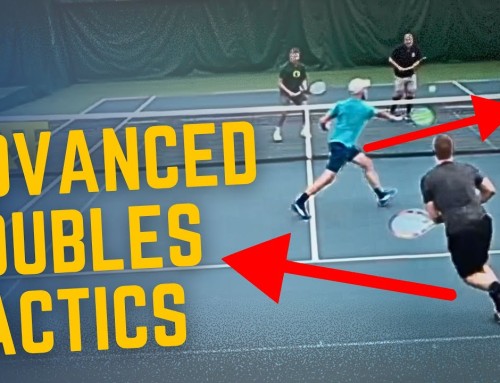
If there’s one thing that separates the pros from everyday players, it’s their tennis footwork — and it’s not what most people think.
I was reviewing video with three of my students recently, and before we started working together, all three of them looked the same way 90% of tennis players look on court: slow, clunky, and reactionary.
After just an hour and a half of focused work, those same three players looked completely different — smooth, fluid, and athletic.
It wasn’t a new grip or a rebuilt swing that changed things. It was footwork.
Here’s the secret nobody talks about enough: professional players look like they’re floating around the court on TV because they’re actually floating.
Watch Carlos Alcaraz recover after a shot, and you’ll notice something specific happens on his way back to center.
His chest, hips, and feet all square up to the net, and right at that moment, he unweights himself and lifts into the air.
He’s not committed to moving left or right yet — he’s neutral, ready for anything.
As he comes down, he reads the ball, plants one foot, pivots the other, and seamlessly redirects his momentum in the new direction. No stopping. No restarting. Just flow.
Compare that to how most amateur players move. The instant the ball leaves their opponent’s racket, they’re standing flat-footed in a “ready position” that isn’t actually ready for anything.
There’s no energy stored up, no momentum to redirect — so every single shot requires them to stop completely and then start all over again.
That’s why recreational tennis so often looks jerky and jagged, while the pros look like they’re gliding.
The good news is that this is trainable, and it starts with three simple checkpoints.
First, your stance needs to be about two times shoulder-width apart — wider than almost every player instinctively thinks is necessary.
Second, you need a soft bend in both knees.
Third, your heels should never fully touch down; your weight should stay on the balls of your feet.
Hit all three of those, and you’re already going to feel bouncier and more prepared, even before you add timing into the mix.
Once that athletic base feels natural, the next step is timing your lift to the moment your opponent’s racket meets the ball — not after.
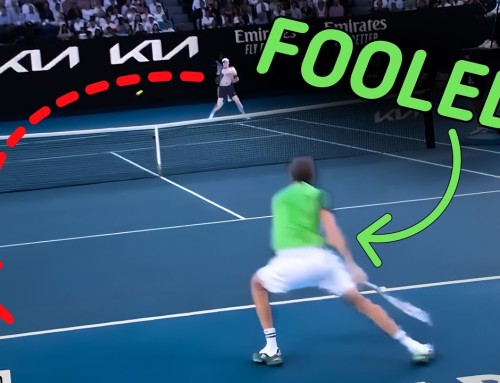
This is the piece most players get backwards. You want to be lifting and unweighting while you’re still reading where the ball is going, not after you’ve already figured it out.
Human reaction time is only a quarter to a third of a second, so your body needs to already be in motion by the time your eyes finish gathering the information.
That’s the real definition of good tennis footwork — moving before you’re certain, not after.
I know split steps get a bad reputation, and I get why — it feels like extra effort, especially early on when your timing is off.
But I promise you, this single habit will do more for your court coverage, your consistency, and your overall ease on court than almost anything else you could practice.
Give yourself permission to feel a little clumsy at first.
Put in the work on this, and I promise your game will elevate in ways you didn’t expect.
Your Coach,
-Ian